ICACT20230157 Slide.18
[Big slide for presentation]
[YouTube]
ICACT20230157 Slide.18
[Big slide for presentation]
[YouTube] |
Chrome Text-to-Speach Click!! Click!! |
 |
That's all. Thank you!
|
|
ICACT20230157 Slide.17
[Big slide for presentation]
[YouTube] |
Chrome Text-to-Speach Click!! |
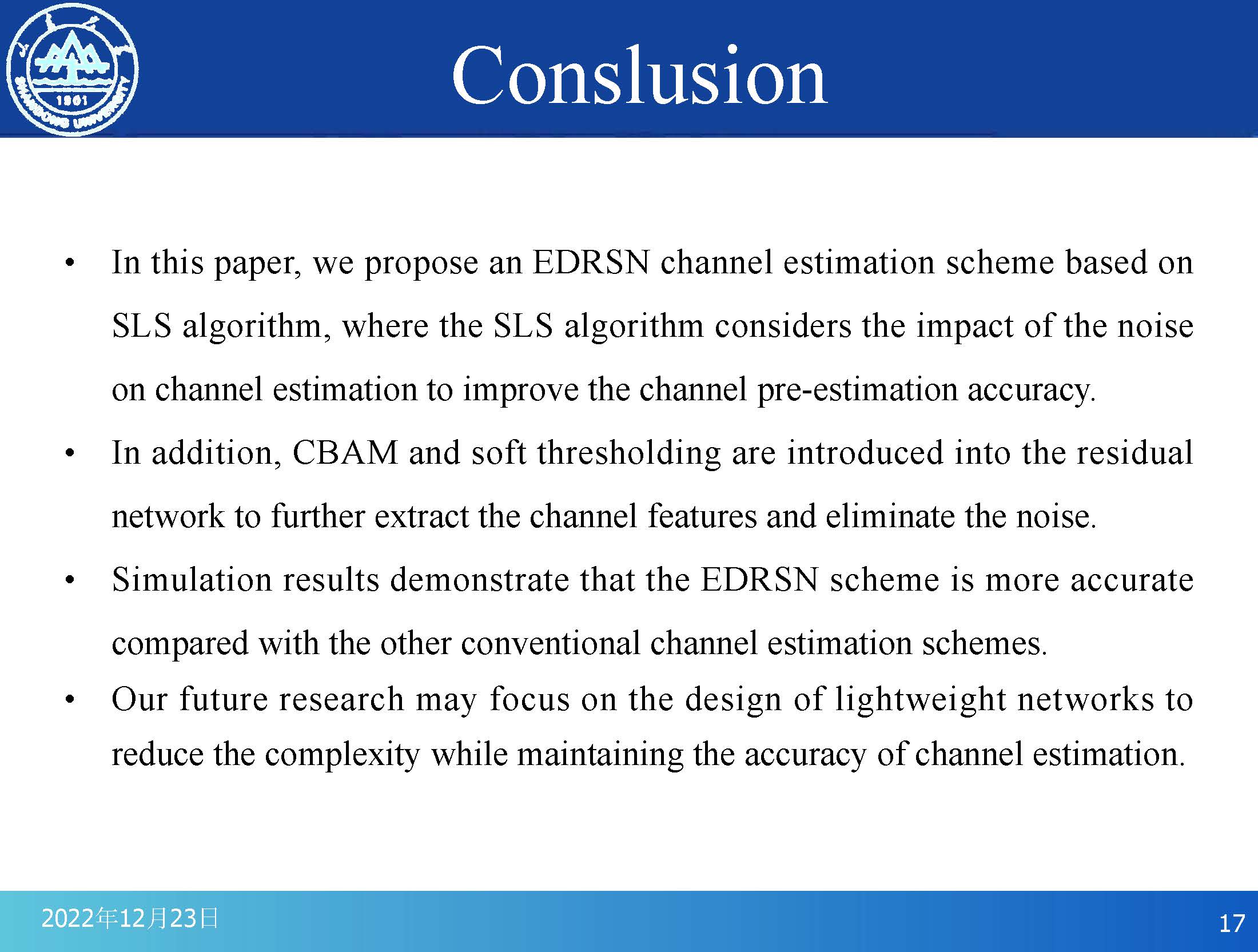 |
Here are the conclusions of this paper, In this paper, we propose an EDRSN channel estimation scheme based on SLS algorithm, where the SLS algorithm considers the impact of the noise on channel estimation to improve the channel pre-estimation accuracy.
In addition, CBAM and soft thresholding are introduced into the residual network to further extract the channel features and eliminate the noise.
Simulation results demonstrate that the EDRSN scheme is more accurate compared with the other conventional channel estimation schemes.
Our future research may focus on the design of lightweight networks to reduce the complexity while maintaining the accuracy of channel estimation.
|
|
ICACT20230157 Slide.16
[Big slide for presentation]
[YouTube] |
Chrome Text-to-Speach Click!! |
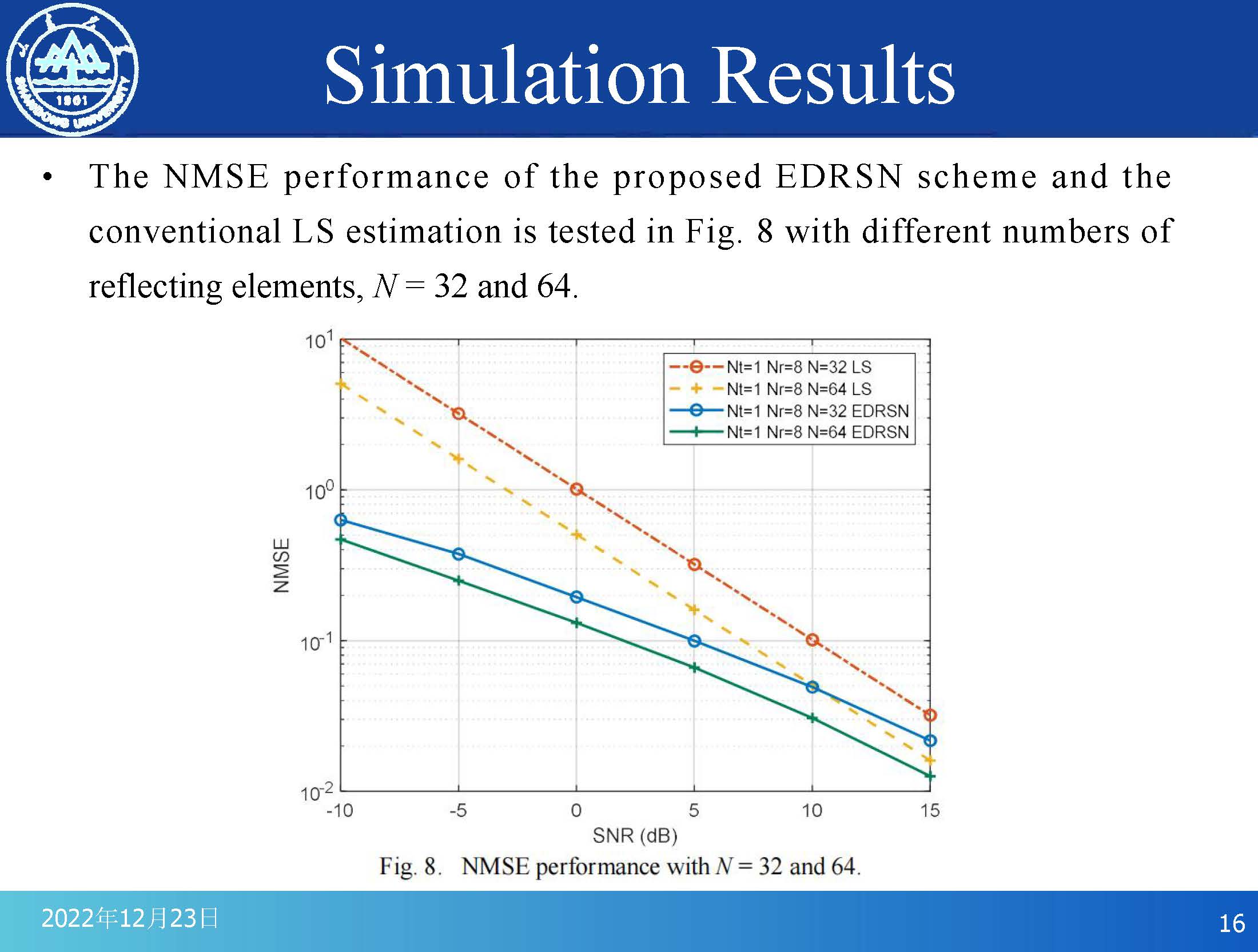 |
The NMSE performance of the proposed EDRSN scheme and the conventional LS estimation is tested in Fig. 8 with different numbers of reflecting elements, N = 32 and 64. It can be seen that the channel matrix becomes more sparse as N increases, so the NMSE performance of the EDRSN scheme at N = 64 is better than that at N = 32. Besides, the EDRSN scheme is superior to the conventional LS estimation at both N = 32 and N = 64, which well demonstrates the superiority of the EDRSN scheme with different N.
|
|
ICACT20230157 Slide.15
[Big slide for presentation]
[YouTube] |
Chrome Text-to-Speach Click!! |
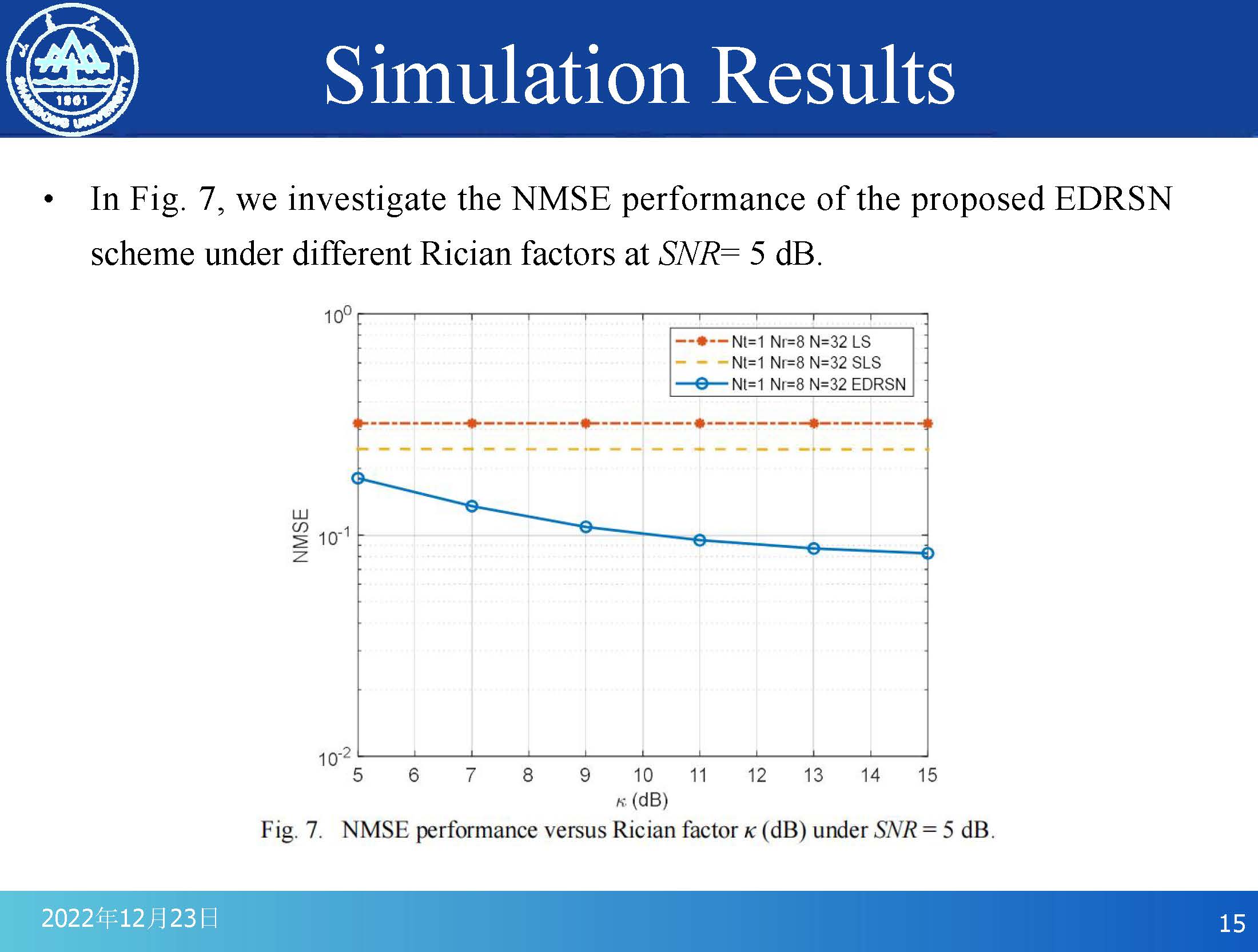 |
In Fig. 7, we investigate the NMSE performance of the proposed EDRSN scheme under different Rician factors at SNR = 5 dB. The values of the Rician factor κ affect the degree of frequency selective fading, which in turn influences the channel state. We can observe that LS and SLS estimation schemes are not affected by the variation of Rician factor κ. This is because LS and SLS scheme are appropriate for arbitrary frequency-selective fading channels. In addition, since the EDRSN model is trained at κ = 10 dB, it is seen that the NMSE performance of the EDRSN scheme degrades with κ < 10 dB, due to the fact that the channel state of RIS-BS link becomes worse with small κ. However, the proposed scheme still outperforms the LS and SLS schemes and its estimation accuracy becomes better as κ increases. Therefore, when the channel state changes, the proposed EDRSN scheme can still estimate the channel matrix with high accuracy.
|
|
ICACT20230157 Slide.14
[Big slide for presentation]
[YouTube] |
Chrome Text-to-Speach Click!! |
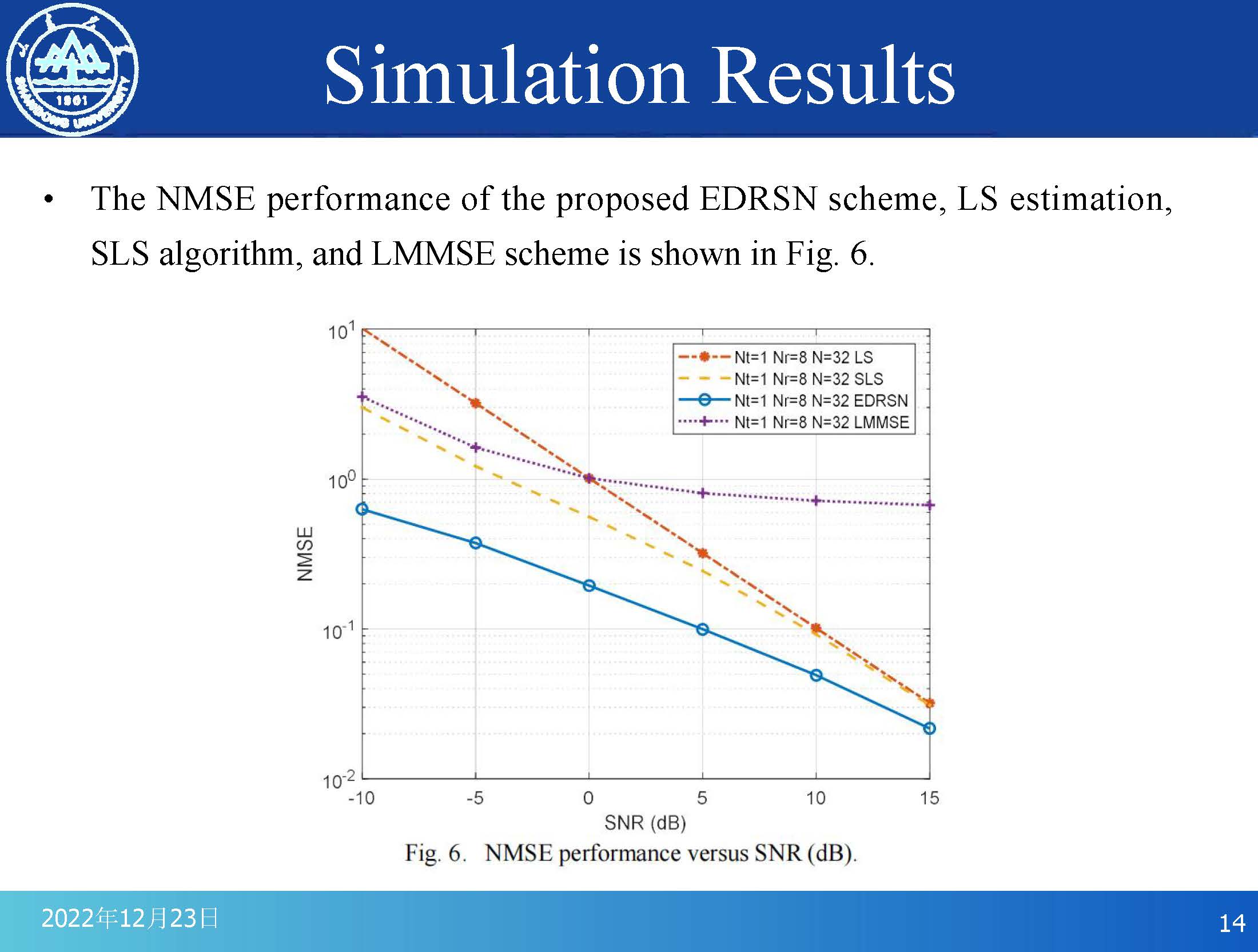 |
Let's look at the simulation results,The NMSE performance of the proposed EDRSN scheme, LS estimation, SLS algorithm, and LMMSE scheme is shown in Fig. 6. We find that the EDRSN scheme outperforms the traditional LS, SLS and LMMSE estimation because the EDRSN scheme is a nonlinear estimation that can learn the channel features and improve the NMSE performance. In addition, the EDRSN scheme outperforms the conventional schemes especially in the case of low SNR because it can get more accurate channel matrix to eliminate the signal noise at the receiver.
|
|
ICACT20230157 Slide.13
[Big slide for presentation]
[YouTube] |
Chrome Text-to-Speach Click!! |
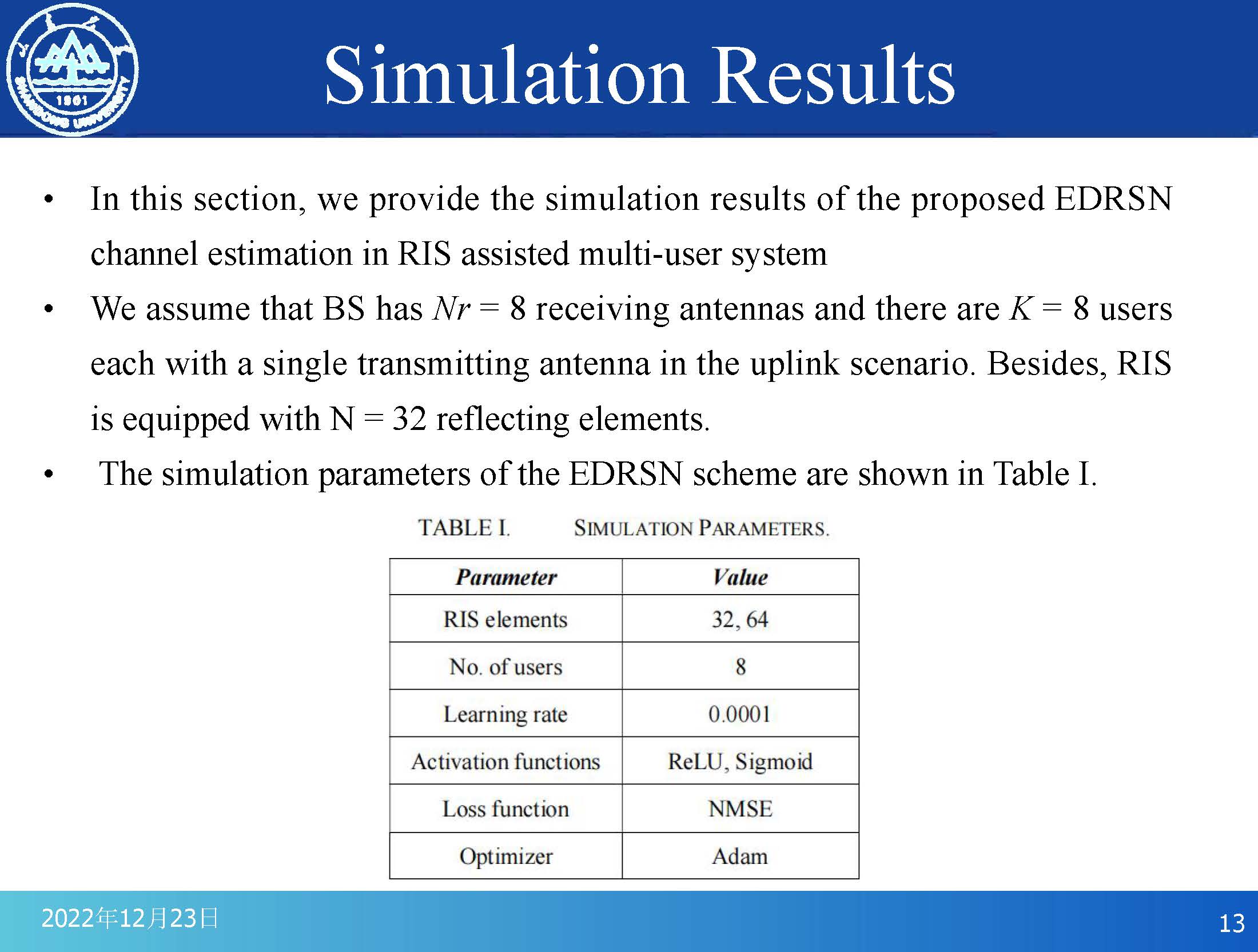 |
In this section, we provide the simulation results of the proposed EDRSN channel estimation in RIS assisted multi-user system
We assume that BS has Nr = 8 receiving antennas and there are K = 8 users each with a single transmitting antenna in the uplink scenario. Besides, RIS is equipped with N = 32 reflecting elements.
The simulation parameters of the EDRSN scheme are shown in Table I.
|
|
ICACT20230157 Slide.12
[Big slide for presentation]
[YouTube] |
Chrome Text-to-Speach Click!! |
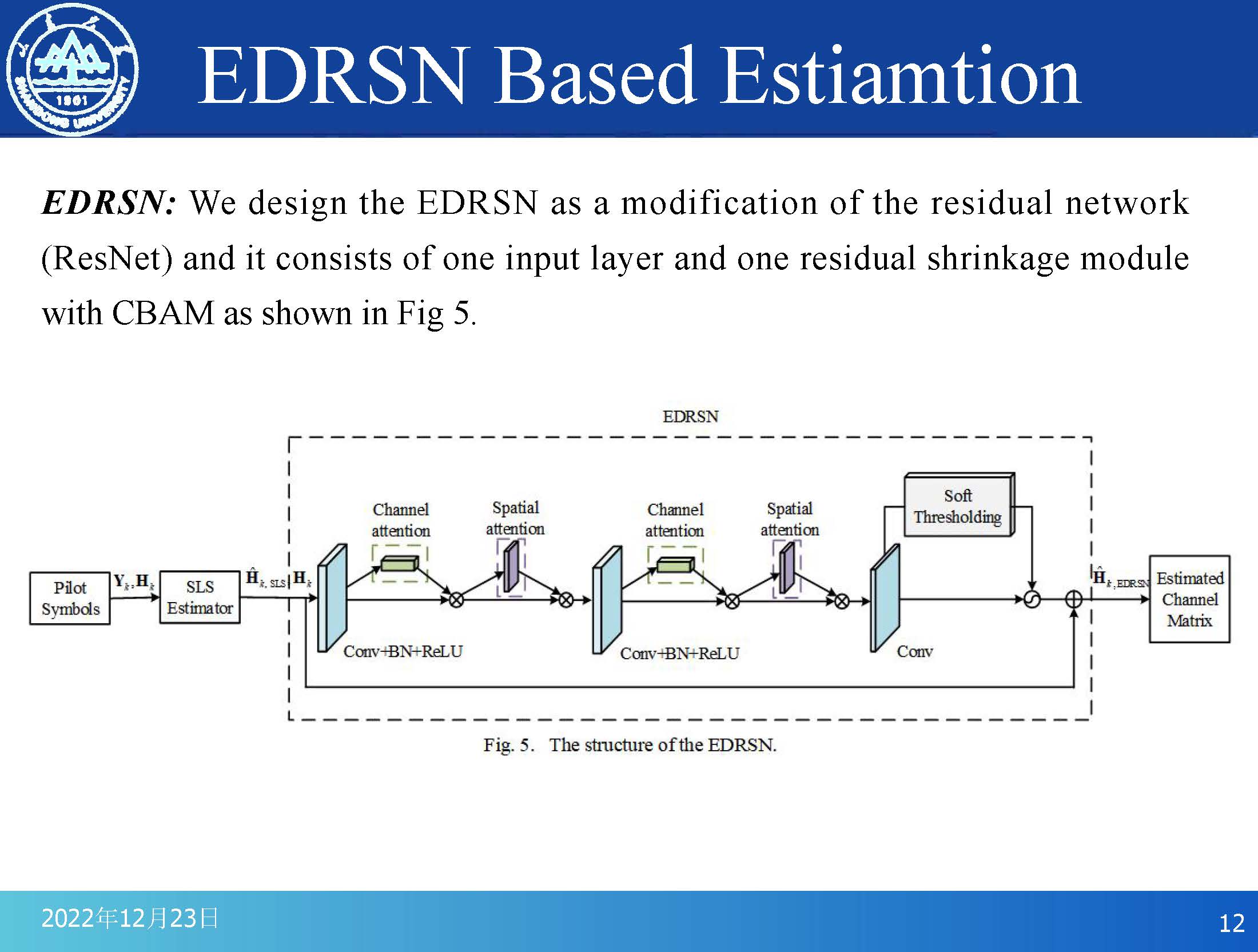 |
We design the EDRSN as a modification of the residual network (ResNet) as shown in Fig 5.
We first input Yk and P into SLS estimation to obtain the rough channel estimation result. Then,and the real channel matrix Hk are fed into the EDRSN as input data and labels. At last, the EDRSN optimizes the network parameters by means of a moment estimation gradient descent algorithm to make the predicted channel matrixmore closely resemble the real channel matrix Hk.
|
|
ICACT20230157 Slide.11
[Big slide for presentation]
[YouTube] |
Chrome Text-to-Speach Click!! |
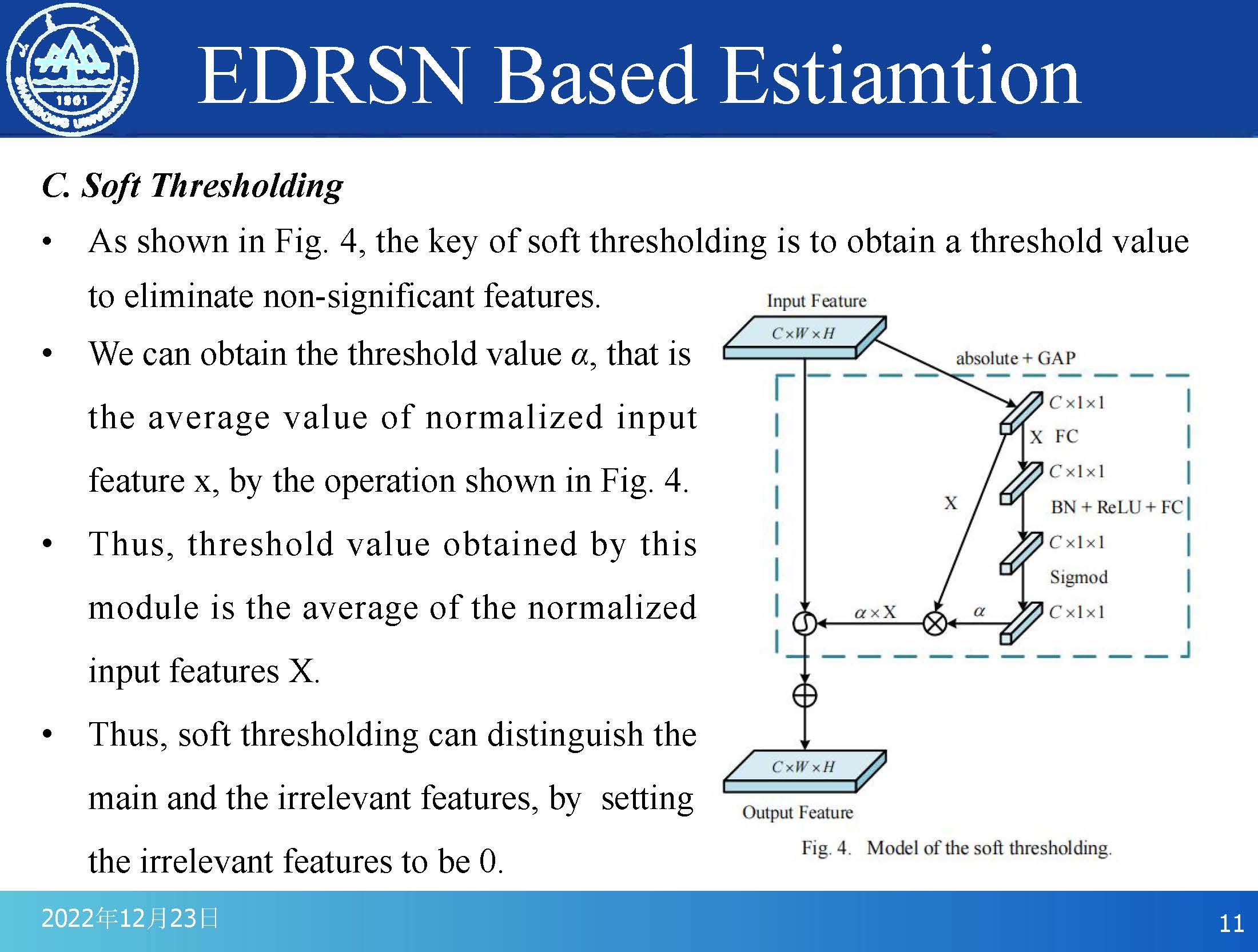 |
The model of Soft Thresholding is shown in Fig. 4.the key of soft thresholding is to obtain a threshold value to eliminate non-significant features. We can obtain the threshold value α by the operation shown in Fig. 4. threshold value obtained by this module is the average of the normalized input features X. soft thresholding can distinguish the main and the irrelevant features, by setting the irrelevant features to be 0.
|
|
ICACT20230157 Slide.10
[Big slide for presentation]
[YouTube] |
Chrome Text-to-Speach Click!! |
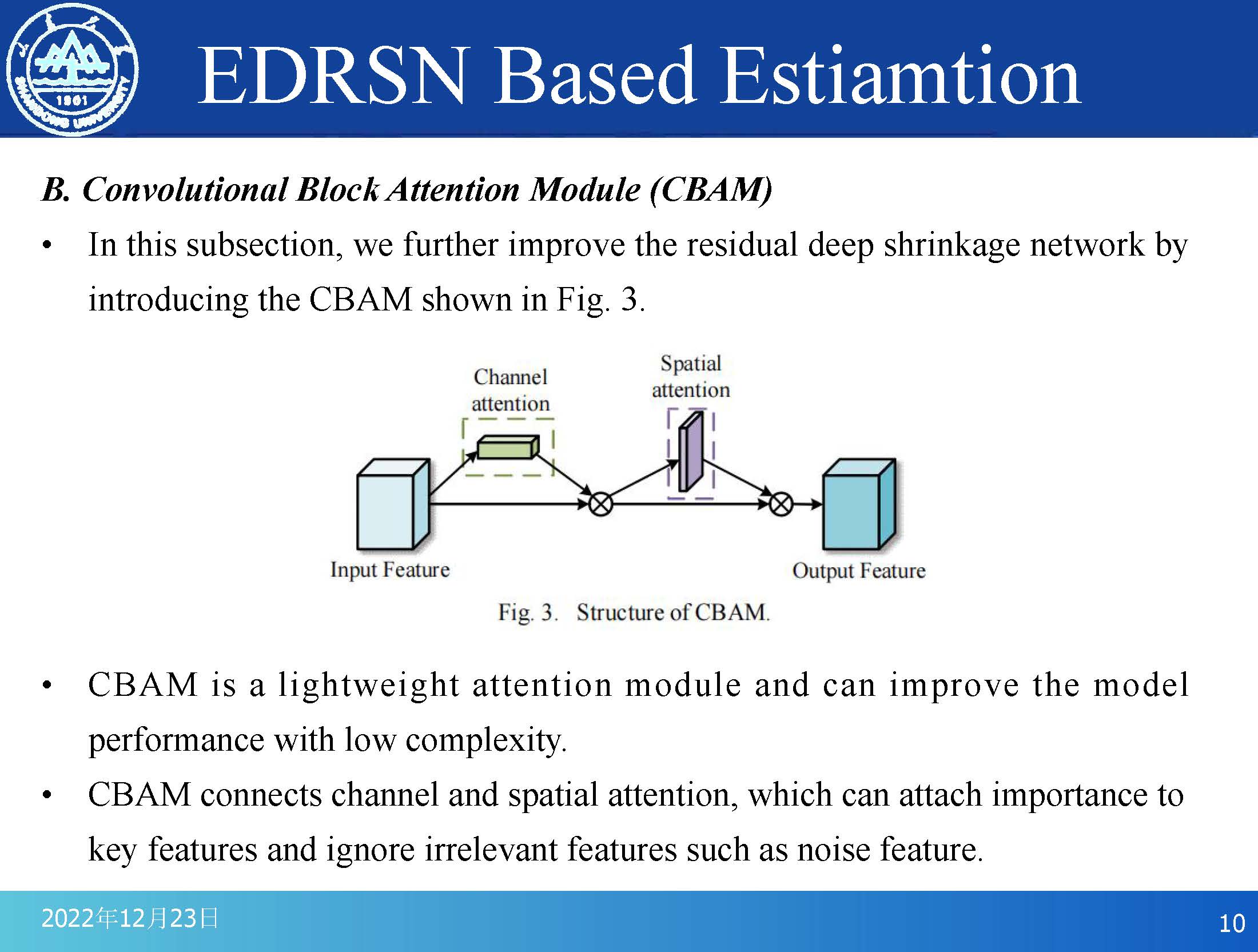 |
The structure of CBAM is shown in Fig. 3. CBAM connects channel and spatial attention, which can attach importance to key features and ignore irrelevant features such as noise feature.
|
|
ICACT20230157 Slide.09
[Big slide for presentation]
[YouTube] |
Chrome Text-to-Speach Click!! |
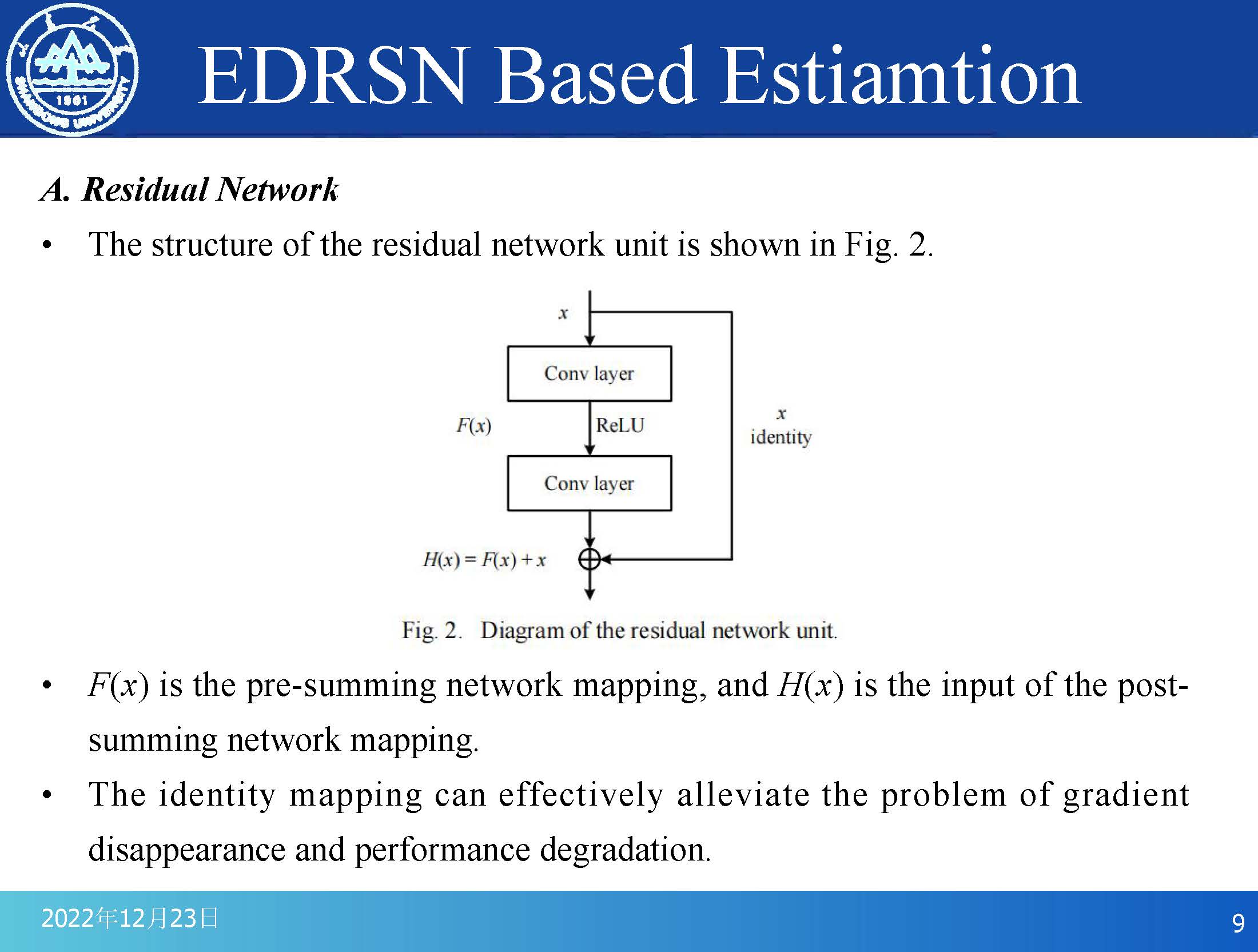 |
The structure of the residual network unit is shown in Fig. 2. F(x) is the pre-summing network mapping, and H(x) is the input of the post-summing network mapping. The identity mapping can effectively alleviate the problem of gradient disappearance and performance degradation.
|
|
ICACT20230157 Slide.08
[Big slide for presentation]
[YouTube] |
Chrome Text-to-Speach Click!! |
 |
In the following we will describe the EDRSN channel estimation method.
In this section, the channel estimation in RIS assisted multiuser system can be modeled as a residual noise cancellation problem and we propose an EDRSN based channel estimation scheme to improve the noise feature extraction and cancellation by introducing soft thresholding and convolutional block attention module (CBAM).
|
|
ICACT20230157 Slide.07
[Big slide for presentation]
[YouTube] |
Chrome Text-to-Speach Click!! |
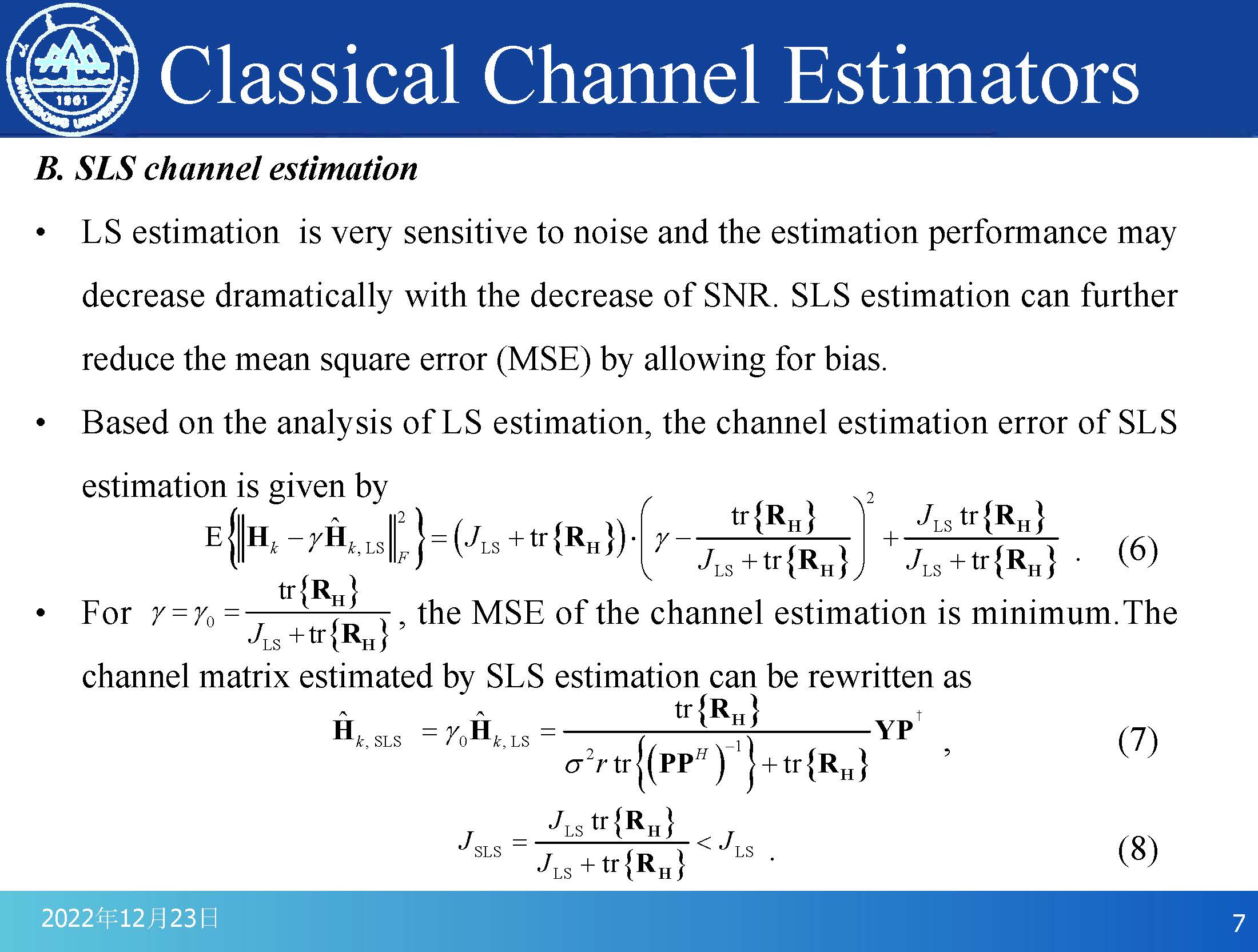 |
Scaled Least square estimation can further reduce the mean square error (MSE) by allowing for bias. Based on the analysis of LS estimation, the channel estimation error of SLS estimation is given by Equation 6. The channel matrix estimated by SLS estimation can be rewritten as Equation 7. We can see that the channel estimation error of the SLS estimation method is lower than that of the LS estimation method.
|
|
ICACT20230157 Slide.06
[Big slide for presentation]
[YouTube] |
Chrome Text-to-Speach Click!! |
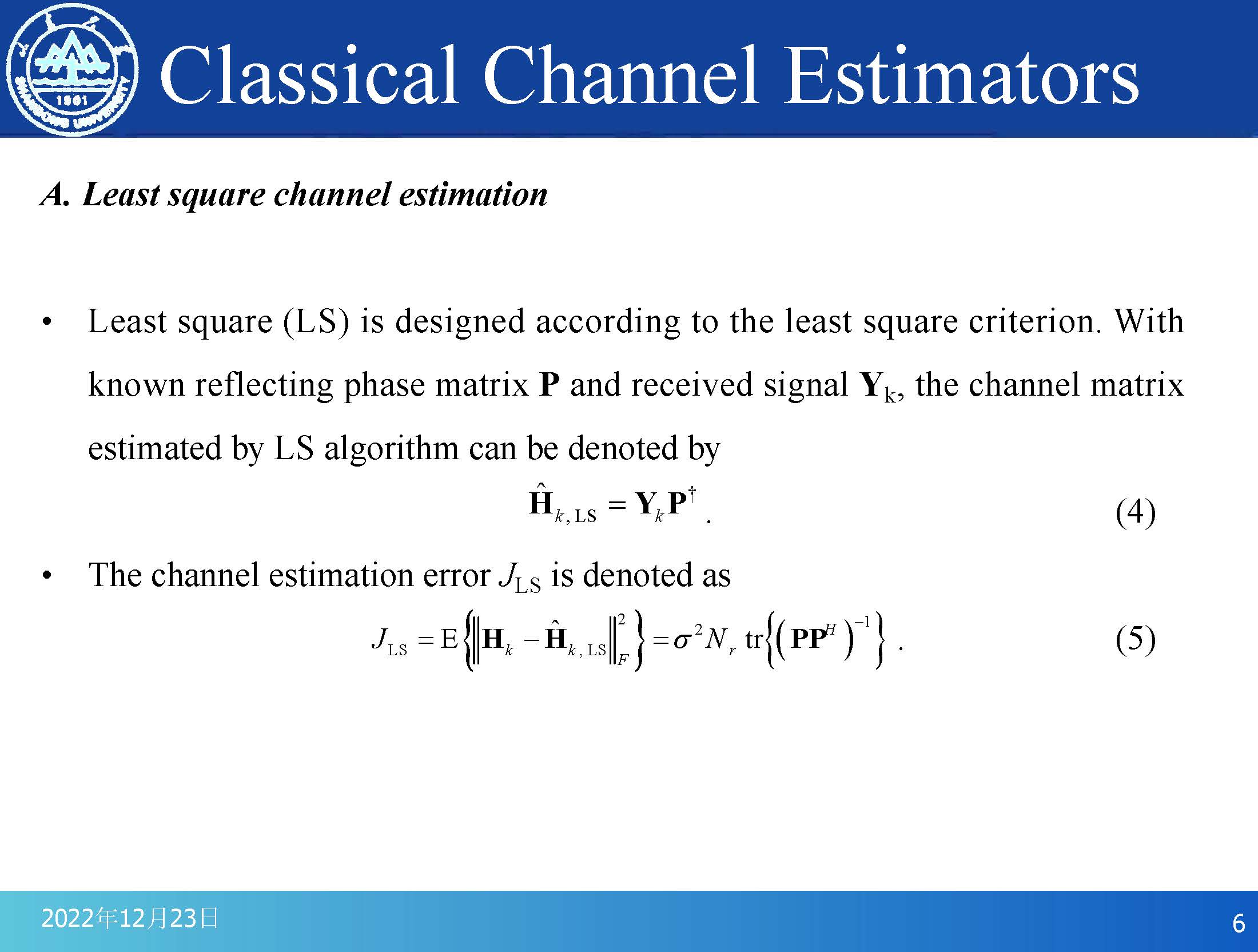 |
The traditional channel estimation methods are described below. Least square (LS) is designed according to the least square criterion[kraɪˈtɪriən]. With known reflecting phase matrix P and received signal Yk, the channel matrix estimated by LS algorithm can be denoted by Equation 4 ,The channel estimation error JLS is denoted as Equation 5.
|
|
ICACT20230157 Slide.05
[Big slide for presentation]
[YouTube] |
Chrome Text-to-Speach Click!! |
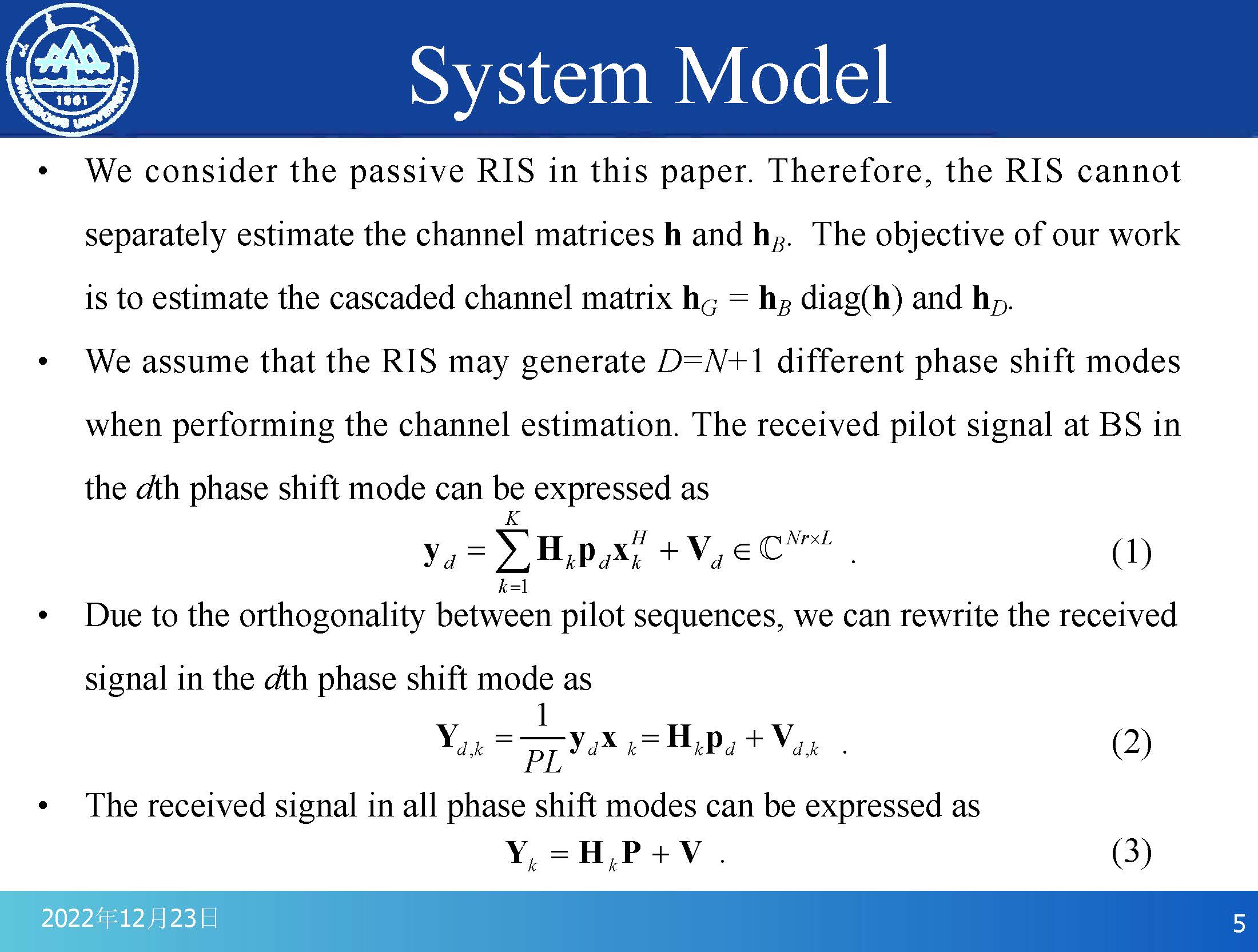 |
The objective of our work is to estimate the cascaded channel matrix hG =hB diag(h) and hD.
We assume that the RIS may generate D=N+1 different phase shift modes. The received pilot signal at BS in the dth phase shift mode can be expressed as Equation 1.
we can rewrite the received signal in the dth phase shift mode as Equation 2. The received signal in all phase shift modes can be expressed as Equation 3.
|
|
ICACT20230157 Slide.04
[Big slide for presentation]
[YouTube] |
Chrome Text-to-Speach Click!! |
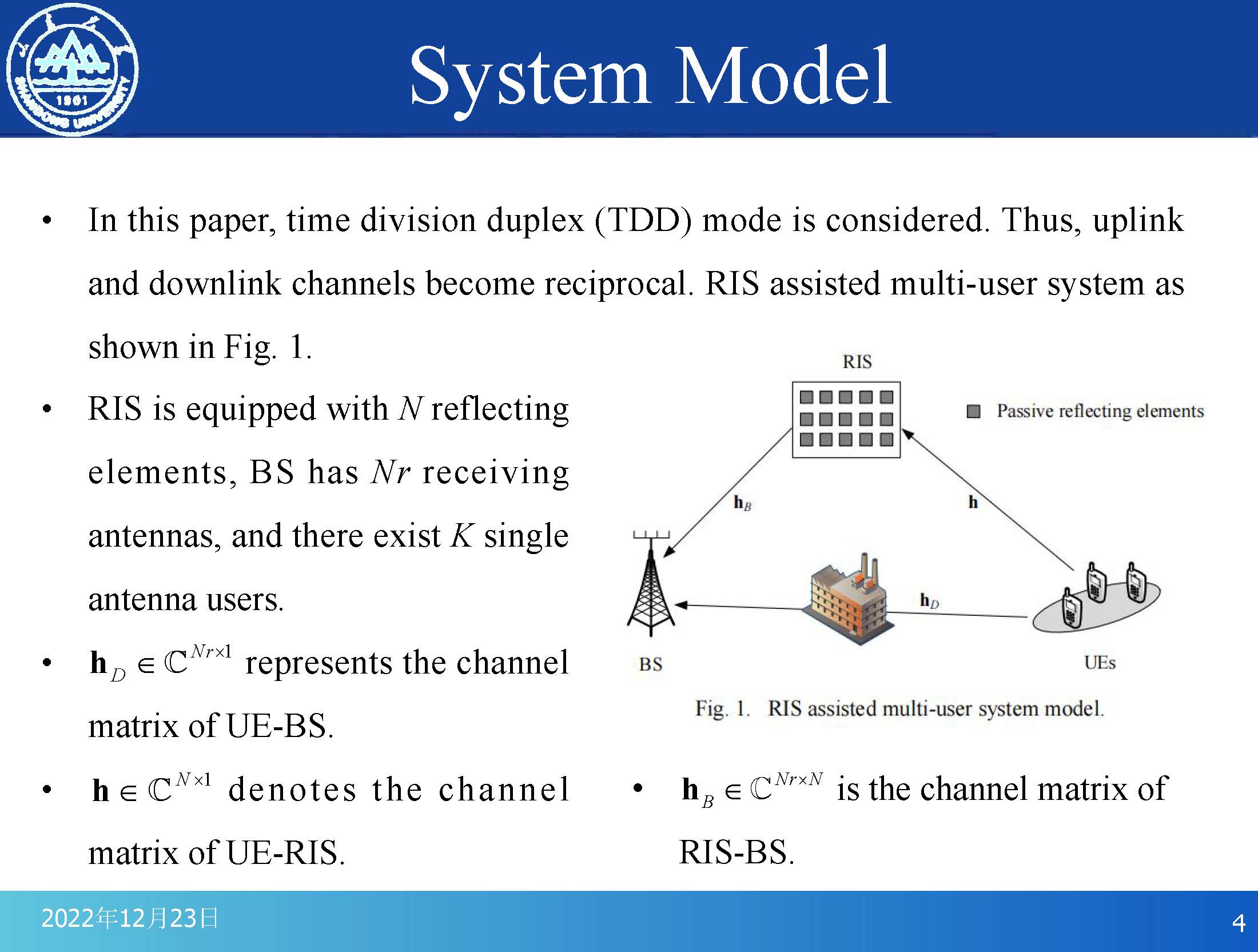 |
Here is the system model,In this paper, time division duplex (TDD) mode is considered. Thus, uplink and downlink channels become reciprocal.RIS is equipped with N reflecting elements, BS has Nr receiving antennas, and there exist K single antenna users.
hD represents the channel matrix of UE-BS,h denotes the channel matrix of UE-RIS,hB is the channel matrix of RIS-BS.
|
|
ICACT20230157 Slide.03
[Big slide for presentation]
[YouTube] |
Chrome Text-to-Speach Click!! |
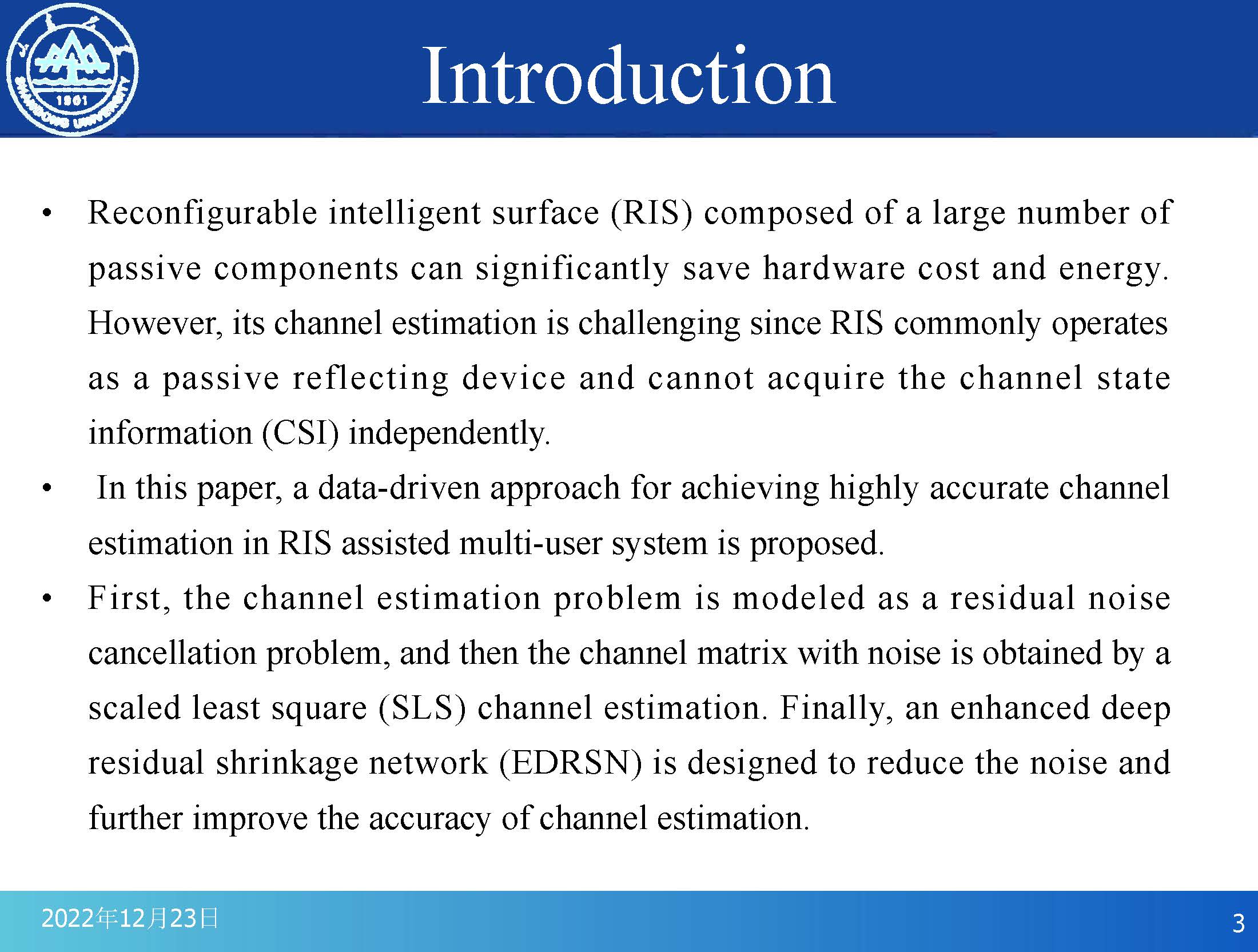 |
Here is the introduction of the paper, Reconfigurable intelligent surface composed of a large number of passive components can significantly save hardware cost and energy. However, its channel estimation is challenging since RIS commonly operates as a passive reflecting device and cannot acquire the channel state information independently.
In this paper, a data-driven approach for achieving highly accurate channel estimation in RIS assisted multi-user system is proposed.
First, the channel estimation problem is modeled as a residual noise cancellation problem, and then the channel matrix with noise is obtained by a scaled least square (SLS) channel estimation. Finally, an enhanced deep residual shrinkage network (EDRSN) is designed to reduce the noise and further improve the accuracy of channel estimation.
|
|
ICACT20230157 Slide.02
[Big slide for presentation]
[YouTube] |
Chrome Text-to-Speach Click!! |
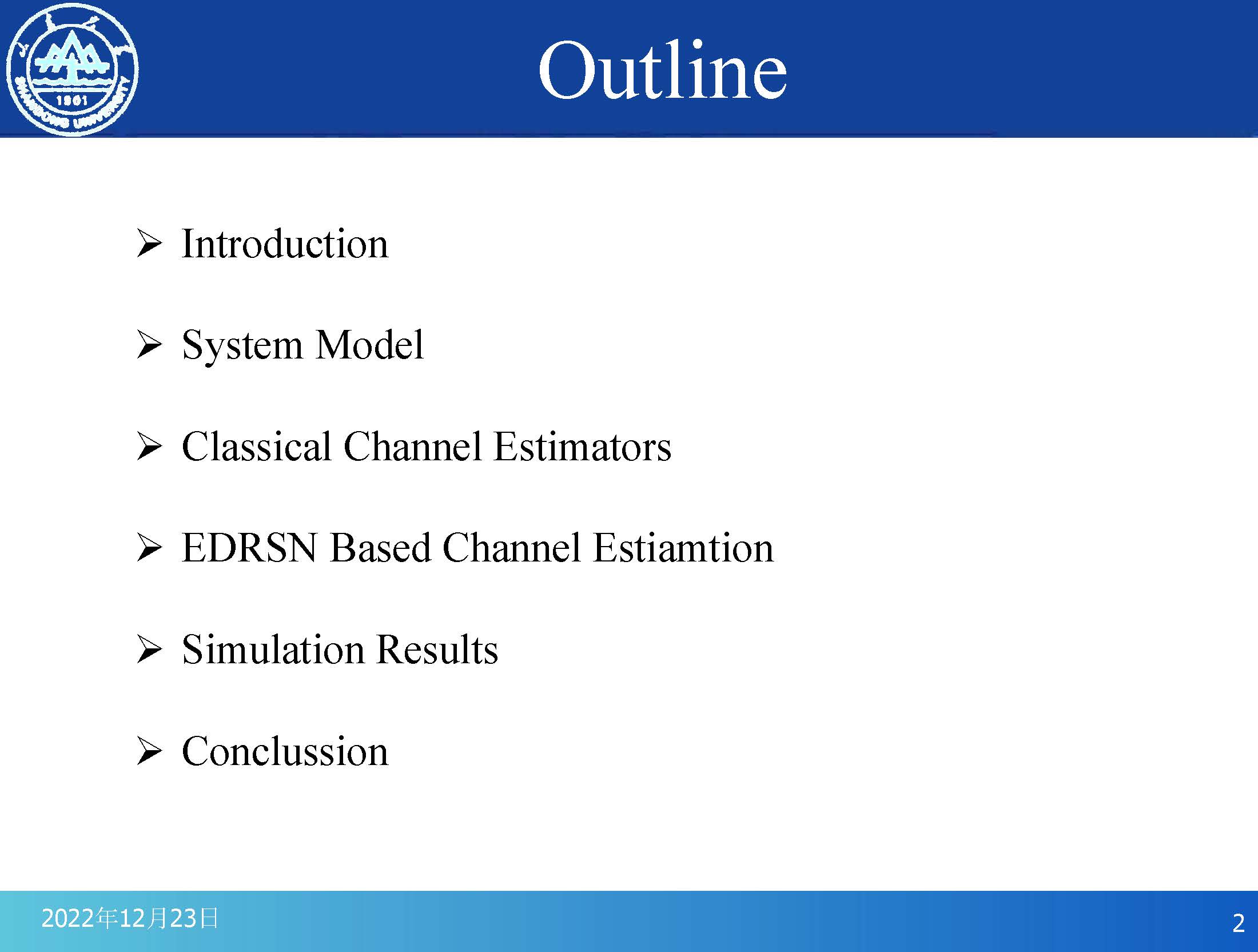 |
I will present my paper in the following six aspects,Introduction、System Model、Classical Channel Estimators、EDRSN Based Channel Estiamtion、Simulation Results and Conclussion.
|
|
ICACT20230157 Slide.01
[Big slide for presentation]
[YouTube] |
Chrome Text-to-Speach Click!! |
 |
Hello, everyone. I am Bangwei He from Shandong University.The title of my paper is:Enhanced Deep Residual Shrinkage Network Based Channel Estimation in RIS Communication System.
|