 |
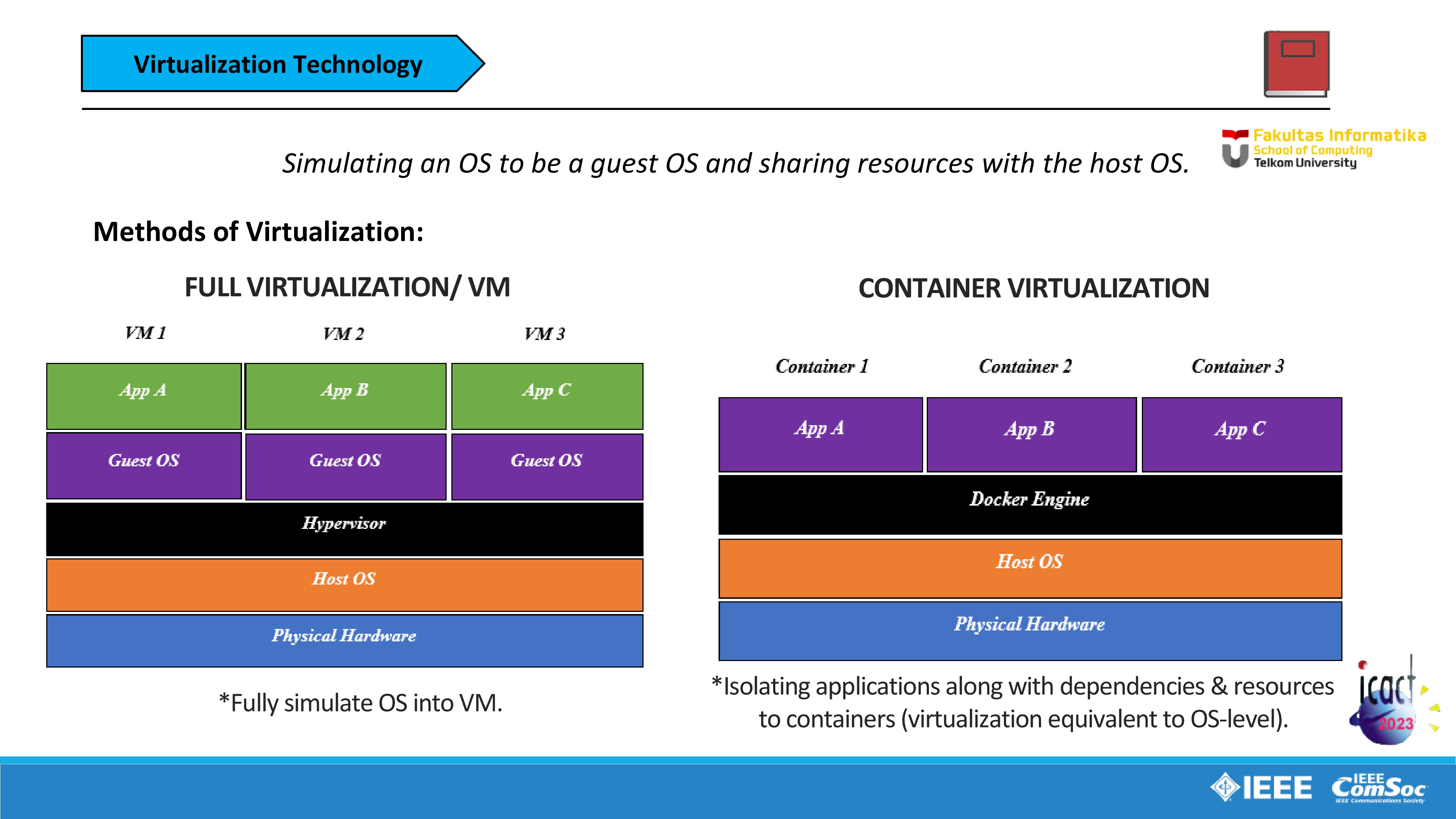
Next section is Virtualization Technology, the main principle of virtualization is to simulate an operating system to be the guest operating system and sharing resources such as memory usage, storage, network, and etc. with the host operating system.
There are two methods of virtualization used in this study.
First is full virtualization or virtual machine, contains several layers, first from the bottom is physical hardware such as PC, next layer is the host operating system like Microsoft Windows or Linux, next layer is hypervisor that controls the virtualization of the guest operating system (and will explained with more details in the next slide). Next layer is guest operating system and last layer is the Application such as virtual e-learning platform like Moodle for example.
And the second method is container virtualization, the architecture layers are similar with the VM but the differences is instead of using hypervisor and simulating the guest operating system, this method is using docker engines for controlling the containerization of the applications especially virtual e-learning platform like Moodle for example.
So the main difference of these two methods is between hypervisor and docker engines. Unlike hypervisor, docker engines is Isolating applications along with dependencies & resources to containers and the virtualization is equivalent to OS-level. And According to Docker, a container is a lightweight, stand-alone, executable package of a piece of software that includes everything needed to run it. This means Docker containers are much smaller and require far fewer resources than full virtualization that fully simulates operating system into virtual machine that use more resources. |
 IEEE/ICACT20230068 Slide.10
[Big Slide]
[YouTube]
IEEE/ICACT20230068 Slide.10
[Big Slide]
[YouTube]